
Healthcare and Medical Assistance Projects
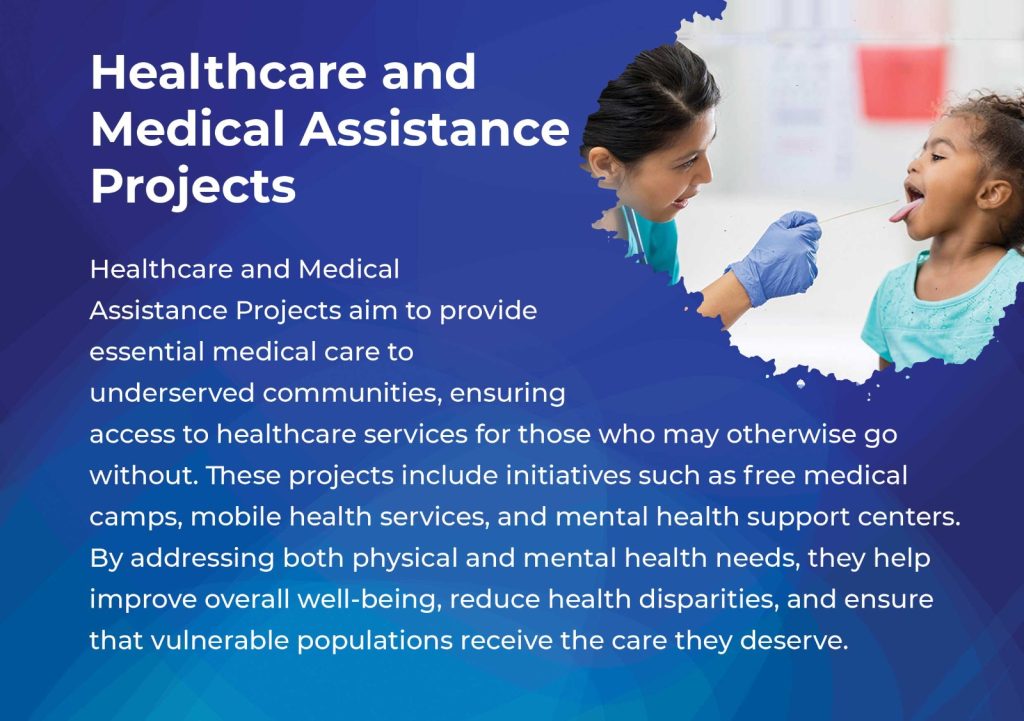
Healthcare and medical assistance projects are critical initiatives that aim to improve the health and well-being of individuals, particularly in underserved or low-resource settings. These projects can take various forms, such as providing direct medical services, improving infrastructure, developing health systems, or raising awareness on health issues.
Here are a few categories of healthcare and medical assistance projects:
1. Primary Healthcare Services
- Mobile Health Clinics: Providing essential healthcare services in remote or rural areas where there is limited access to hospitals or clinics.
- Vaccination Programs: Coordinating vaccination efforts to prevent infectious diseases like polio, malaria, tuberculosis, and COVID-19.
- Health Education: Offering basic health education about hygiene, nutrition, sexual health, mental health, and disease prevention.
2. Emergency Medical Assistance
- Disaster Relief: Deploying medical teams to provide immediate care after natural disasters (earthquakes, floods, hurricanes, etc.).
- Crisis Response: Offering medical assistance in conflict zones, refugee camps, or regions experiencing humanitarian crises.
3. Maternal and Child Health
- Safe Birth Initiatives: Promoting maternal health by ensuring access to skilled birth attendants, safe birthing facilities, and prenatal/postnatal care.
- Nutritional Programs: Addressing malnutrition among children through food assistance, education, and micronutrient supplementation.
4. Mental Health Support
- Counseling Services: Providing psychological support and counseling to individuals facing mental health issues, particularly in crisis or conflict situations.
- Awareness Campaigns: Raising awareness about mental health issues and reducing stigma in communities.
5. Healthcare Infrastructure Development
- Building Hospitals and Clinics: Constructing healthcare facilities in underserved or developing areas to expand access to medical care.
- Renovation and Equipment Donation: Upgrading outdated medical equipment and improving healthcare facilities to provide better care.
6. Health System Strengthening
- Training Healthcare Workers: Offering professional development and training programs for doctors, nurses, and other healthcare staff.
- Health Data Management: Supporting the creation of health information systems that help track and improve patient care and medical responses.
7. Disease-Specific Programs
- HIV/AIDS Prevention and Care: Providing education, testing, treatment, and support services for individuals affected by HIV/AIDS.
- Tuberculosis and Malaria Eradication: Collaborating with governments and international organizations to reduce the incidence of diseases like tuberculosis and malaria.
8. Telemedicine and Digital Health
- Remote Health Consultations: Using digital platforms to connect patients in remote or underserved areas with healthcare professionals.
- Digital Health Monitoring: Implementing digital tools to track patients’ health metrics and provide real-time feedback to healthcare providers.
9. Health Advocacy and Policy Initiatives
- Health Policy Reform: Advocating for changes in national and global healthcare policies to improve access, equity, and quality of care.
- Public Health Campaigns: Running awareness campaigns to educate the public about healthy lifestyles, preventative care, and chronic disease management.
10. Non-Communicable Diseases (NCD) Programs
- Chronic Disease Management: Offering services for diseases like diabetes, hypertension, and cancer through screening, treatment, and education programs.
- Prevention Campaigns: Educating the public on how to prevent NCDs through lifestyle changes, including proper diet, exercise, and regular check-ups.
Examples of Successful Projects:
- Doctors Without Borders (Médecins Sans Frontières): Provides emergency medical aid in conflict zones and disaster areas worldwide.
- The Global Fund: Works to combat HIV/AIDS, tuberculosis, and malaria through funding and global partnerships.
- GAVI, the Vaccine Alliance: Provides vaccines to children in low-income countries to prevent deadly diseases.
- The Bill and Melinda Gates Foundation: Focuses on reducing global poverty and improving healthcare systems in developing countries.
Conclusion:
Healthcare and medical assistance projects are essential for creating sustainable improvements in global health. Whether addressing immediate medical needs, strengthening healthcare systems, or improving awareness of health issues, these projects make a significant impact in improving the quality of life for people around the world.