
Emergency Response and Disaster Relief
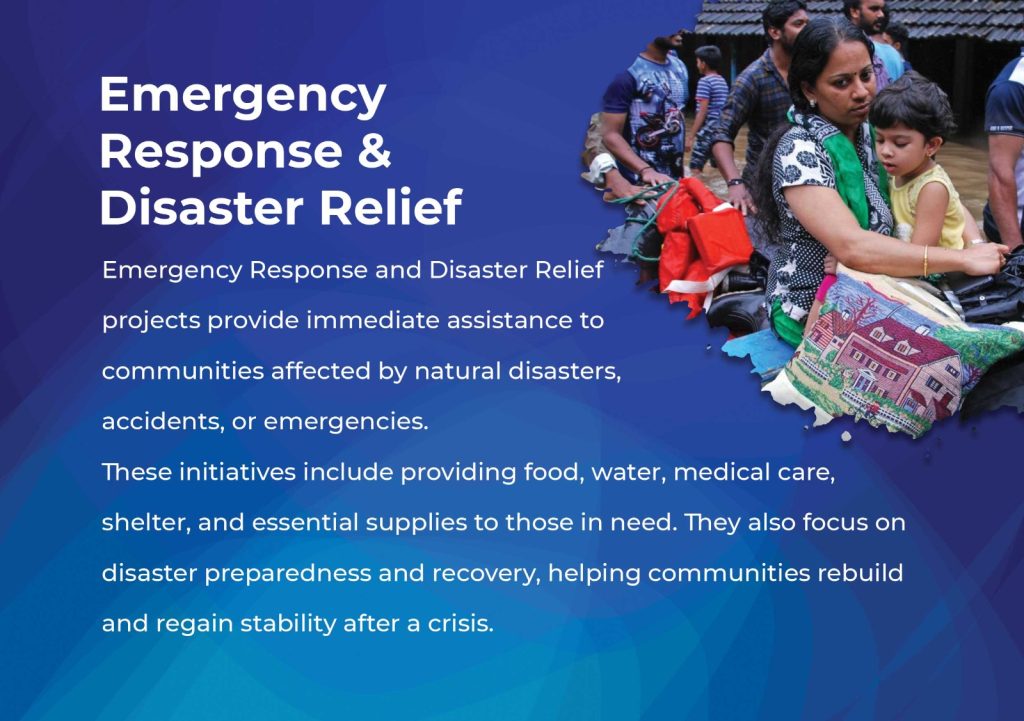
Emergency response and disaster relief programs are essential for saving lives, reducing suffering, and helping communities recover in the aftermath of natural and man-made disasters. These programs are designed to provide immediate aid to those affected by disasters, address urgent needs, and lay the groundwork for long-term recovery and resilience. Here’s an overview of various emergency response and disaster relief projects:
1. Disaster Preparedness and Early Warning Systems
- Early Warning Systems: Implementing technologies and communication networks that provide real-time alerts about impending disasters (e.g., hurricanes, earthquakes, tsunamis) to enable communities to take timely protective actions.
- Community Training and Awareness: Educating local populations on disaster preparedness, including first aid, evacuation plans, and how to protect themselves and their property in the event of natural disasters.
- Evacuation Plans: Developing and disseminating evacuation plans for communities, ensuring that transportation, shelters, and resources are in place to support an orderly evacuation during disasters.
2. Search and Rescue Operations
- Urban Search and Rescue: Deploying specialized teams to search for and rescue individuals trapped in collapsed buildings, debris, or wreckage, particularly after earthquakes, bombings, or structural failures.
- Waterborne Search and Rescue: Deploying boats and helicopters to rescue people from floods or water-related disasters. These teams are often equipped with specialized tools to navigate hazardous floodwaters.
- Aerial Surveillance: Using drones, helicopters, or other aerial vehicles to survey disaster-stricken areas and locate survivors, assess damage, and identify where aid is needed most.
3. Food and Water Distribution
- Emergency Food Aid: Providing immediate food supplies to affected populations, often in the form of ready-to-eat meals, canned food, or high-energy nutritional packets for vulnerable groups such as children, elderly, and the sick.
- Clean Water Supply: Delivering clean, potable water to communities impacted by disasters, particularly in areas where water sources have been contaminated or destroyed. This can include bottled water, water purification tablets, or mobile water purification units.
- Mobile Kitchens: Setting up temporary mobile kitchens or food stations in disaster zones to provide hot meals and alleviate food shortages, especially in areas where local infrastructure is compromised.
4. Emergency Shelter and Housing
- Temporary Shelters: Providing tents, tarps, or temporary housing units for displaced populations who have lost their homes due to natural disasters. These shelters are designed to offer immediate protection from the elements while longer-term housing solutions are developed.
- Disaster Relief Camps: Setting up disaster relief camps that include shelter, food, medical care, and sanitation facilities for people who have been displaced by the disaster.
- Reconstruction of Homes: Assisting with the rebuilding of homes and infrastructure for families who have lost their homes, often working in collaboration with local governments and communities.
5. Healthcare and Medical Support
- Mobile Clinics and Field Hospitals: Deploying medical teams with mobile clinics or field hospitals to provide immediate healthcare to survivors, especially in areas where local healthcare facilities have been destroyed or are overwhelmed.
- First Aid and Emergency Care: Providing first aid kits and emergency medical supplies (e.g., bandages, medications, surgical tools) to local healthcare providers and volunteers who are treating the injured.
- Mental Health Support: Offering psychological first aid and counseling services to disaster survivors, as they may experience trauma, stress, and grief due to the disaster and loss of loved ones.
- Disease Prevention: Distributing vaccines, medications, and mosquito nets to prevent the spread of diseases that often follow disasters, such as cholera, malaria, or respiratory infections.
6. Logistics and Supply Chain Support
- Transportation of Aid: Organizing the transport of emergency supplies (e.g., food, water, medicine, blankets) to affected areas. This may include using trucks, ships, helicopters, or drones, depending on the accessibility of the disaster area.
- Warehousing and Distribution: Setting up temporary warehouses to store and manage incoming aid, ensuring that it is efficiently distributed to affected communities and individuals.
- Supply Chain Coordination: Coordinating with government agencies, NGOs, and other relief organizations to ensure that resources are efficiently allocated and delivered, and that there is no duplication of efforts.
7. Sanitation and Hygiene
- Portable Toilets and Latrines: Installing emergency sanitation facilities such as portable toilets and latrines to prevent the spread of disease in overcrowded disaster areas.
- Water, Sanitation, and Hygiene (WASH) Programs: Implementing programs to provide safe drinking water, sanitation facilities, and hygiene kits (including soap, disinfectants, menstrual hygiene products) to disaster-affected populations.
- Public Health Education: Educating affected communities about hygiene practices, such as handwashing and water purification techniques, to prevent disease outbreaks after disasters.
8. Child Protection and Vulnerable Populations
- Child-Friendly Spaces: Creating safe spaces for children in disaster relief camps, where they can receive psychological support, education, and engage in recreational activities to help them cope with trauma.
- Protection Services for Vulnerable Groups: Ensuring that vulnerable populations, including the elderly, disabled, and pregnant women, have access to specific support services, such as medical care, nutrition, and shelter.
- Family Tracing and Reunification: Assisting in tracing and reunifying children separated from their families during disasters, using child protection protocols, and collaborating with international agencies like the International Red Cross or UNICEF.
9. Rebuilding Infrastructure
- Road Repair and Reconstruction: Restoring critical infrastructure such as roads, bridges, and public transportation networks that have been damaged or destroyed in disasters, allowing people to access relief and resume normal activities.
- Restoring Power and Communication: Re-establishing electricity, internet, and telecommunications networks to facilitate communication, rescue operations, and recovery efforts.
- Water and Sewage System Repairs: Rebuilding or repairing water distribution and sewage systems to ensure access to clean water and proper sanitation, which is essential for health and recovery.
10. Disaster Recovery and Resilience Building
- Community Rehabilitation: Supporting long-term recovery efforts by helping communities rebuild their livelihoods, including providing tools, seeds, and technical support for farmers, small businesses, and local industries.
- Psychosocial Support: Providing long-term mental health support, including counseling services, community activities, and support groups to help individuals cope with the emotional aftermath of disasters.
- Disaster Risk Reduction (DRR): Implementing programs that aim to reduce the risk of future disasters by improving early warning systems, developing resilient infrastructure, and educating communities about how to prepare for and respond to future crises.
11. Fundraising and Resource Mobilization
- Global Fundraising Campaigns: Launching fundraising campaigns to raise money for disaster relief efforts. These can be done through online platforms, charity events, or direct donations from individuals, corporations, and governments.
- In-Kind Donations: Organizing the collection and delivery of in-kind donations, such as clothing, food, medical supplies, and hygiene products, to disaster-affected areas.
- Corporate and Government Partnerships: Collaborating with corporations, local governments, and international organizations to secure funding and resources for disaster response and recovery.
12. Disaster Response Coordination and Advocacy
- Coordination Among Agencies: Ensuring that relief efforts are well-coordinated between different actors, including governments, UN agencies, NGOs, and local organizations, to avoid duplication of efforts and ensure effective distribution of resources.
- Advocacy for Policy Change: Advocating for stronger disaster preparedness and response policies, both locally and internationally, to ensure better protection for vulnerable populations and more efficient disaster relief in the future.
Examples of Successful Disaster Relief Programs:
- The Red Cross and Red Crescent Societies: Provides comprehensive disaster response, including search and rescue, medical aid, food and water distribution, and long-term recovery efforts. They are one of the most prominent organizations in global disaster relief.
- Doctors Without Borders (Médecins Sans Frontières): Delivers emergency medical care in areas affected by disasters, conflict, and epidemics, with a focus on providing healthcare where it is most needed.
- UNICEF Emergency Relief: Provides lifesaving support for children and families affected by natural disasters and conflicts, including nutrition, education, protection, and health services.
- The World Food Programme (WFP): Offers food assistance to populations affected by crises, providing both emergency food aid and longer-term food security solutions in disaster-prone regions.
- Oxfam: Provides water, sanitation, and food assistance, along with long-term recovery programs, focusing on building resilience in communities affected by disasters.
Conclusion:
Emergency response and disaster relief programs are critical for saving lives, alleviating suffering, and supporting recovery after disasters. By providing immediate food, water, shelter, and medical care, these programs ensure that affected communities receive the help they need to survive and begin rebuilding their lives. In addition to immediate relief efforts, these programs focus on long-term resilience, disaster risk reduction, and rebuilding essential infrastructure to help communities recover and prepare for future disasters.