
Food Security and Hunger Relief Programs
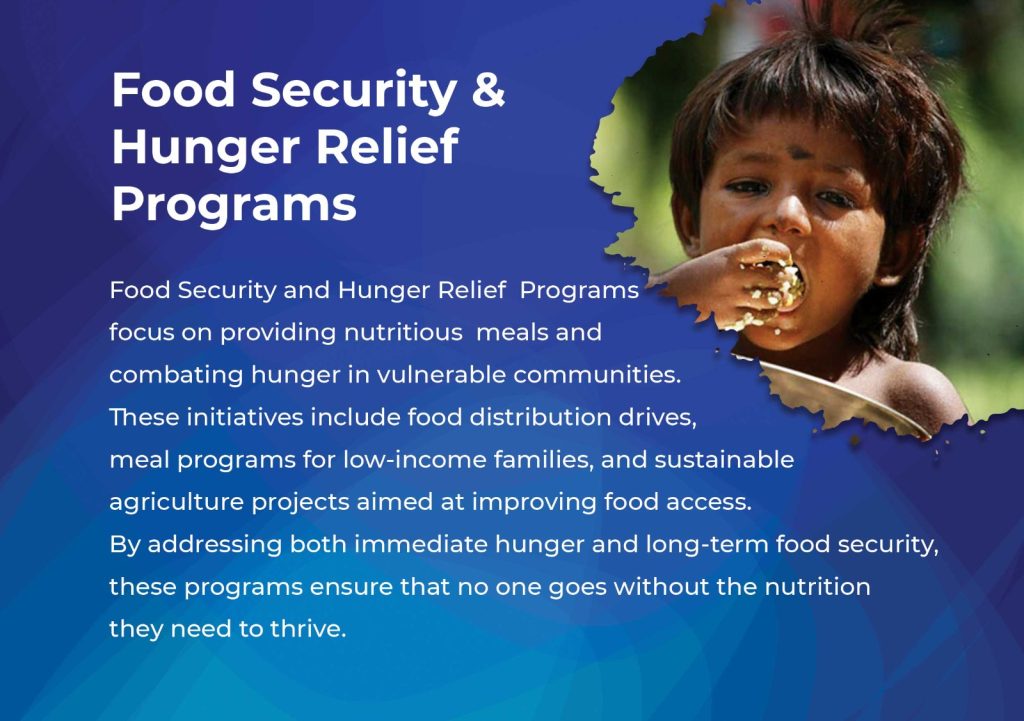
Food security and hunger relief programs are vital for addressing the global challenges of hunger, malnutrition, and food scarcity. These programs aim to ensure that all individuals have consistent access to nutritious, safe, and sufficient food to lead a healthy and active life. They play a key role in reducing poverty, improving health outcomes, and promoting social stability. Here’s an overview of various food security and hunger relief projects:
1. Food Distribution Programs
- Emergency Food Aid: Providing immediate food assistance to communities facing crises such as natural disasters, conflict, or economic downturns. These programs deliver emergency food supplies (e.g., canned goods, dried foods, or ready-to-eat meals) to affected populations.
- Food Banks: Establishing and supporting food banks that collect and distribute surplus food to individuals and families in need. Food banks often partner with local businesses, farms, and food manufacturers to source donations.
- Mobile Food Distribution: Organizing mobile food units that travel to remote or underserved areas to distribute food to communities that lack access to traditional food aid resources.
2. School Feeding Programs
- Nutritional School Meals: Providing free or subsidized meals to children in schools to improve their nutrition, enhance learning, and reduce dropout rates. These programs help children from low-income families access regular, healthy meals.
- School Gardens: Encouraging schools to grow their own food, which can supplement school meal programs while also teaching students about nutrition, agriculture, and sustainability.
- Backpack Programs: Providing children in need with food to take home over the weekend to ensure they have enough to eat when not in school.
3. Community-Based Agriculture and Food Production
- Urban Farming: Promoting urban agriculture projects where communities grow their own food in cities or towns. These projects often include rooftop gardens, vertical farming, and community gardens that provide fresh produce to local residents.
- Community Supported Agriculture (CSA): Facilitating partnerships between local farmers and community members to ensure regular delivery of fresh produce. In exchange for a subscription fee, members receive a share of the farm’s produce throughout the growing season.
- Agroecology and Sustainable Farming: Supporting smallholder farmers by teaching them sustainable and environmentally friendly farming practices that increase food production, improve soil health, and reduce reliance on harmful chemicals.
4. Nutrition Education and Awareness
- Cooking and Nutrition Workshops: Providing families with knowledge on how to prepare nutritious, affordable meals. These workshops often focus on utilizing local, seasonal ingredients to create healthy meals on a budget.
- Public Awareness Campaigns: Running campaigns to raise awareness about the importance of good nutrition, including the risks of malnutrition and how to maintain a balanced diet using available resources.
- Micronutrient Supplementation: Distributing essential vitamins and minerals to combat malnutrition in vulnerable populations, such as children, pregnant women, and the elderly. This includes iron, vitamin A, and iodine supplements.
5. Food Fortification Projects
- Fortified Foods: Promoting the production of staple foods (e.g., rice, flour, oil) that are fortified with essential vitamins and minerals. These fortified foods can help address common deficiencies in micronutrients like vitamin A, iron, and folic acid.
- Home Fortification: Providing families with small sachets of micronutrient powders or oil that can be added to meals to improve the nutritional value of their food.
6. Sustainable Food Systems
- Regenerative Agriculture: Supporting farming practices that restore soil health, increase biodiversity, and capture carbon in the soil. These methods help increase food production while minimizing the environmental impact.
- Food Waste Reduction: Educating individuals, businesses, and communities on how to reduce food waste by using food more efficiently and redistributing surplus food to those in need. This includes composting, repurposing food scraps, and redistributing unused food.
- Farm-to-Table Initiatives: Supporting local food systems by promoting direct sales from farmers to consumers through farmers’ markets, food cooperatives, and local food hubs, which can provide more affordable and nutritious food options.
7. Livelihood and Income Support Programs
- Cash Transfers and Vouchers: Providing direct financial assistance to low-income families to allow them to purchase food. This can include cash transfers or food vouchers that can be redeemed for essential food items at local markets.
- Microfinance for Small Farmers: Offering microloans to smallholder farmers, enabling them to purchase seeds, tools, and equipment to improve their food production capabilities. These loans can also help farmers access training and resources for increasing productivity and income.
- Livestock Support: Providing livestock (e.g., goats, chickens, cows) to communities to improve their food security and provide a sustainable source of food, income, and materials (e.g., milk, eggs, leather, wool).
8. Disaster Relief and Resilience Building
- Disaster-Resilient Agricultural Practices: Teaching communities at risk of natural disasters how to implement disaster-resistant farming techniques, including drought-tolerant crops, efficient irrigation systems, and soil conservation practices.
- Climate-Resilient Food Systems: Working to build food systems that can withstand the impacts of climate change, including altering planting schedules, diversifying crops, and utilizing drought-resistant varieties.
- Emergency Relief Kits: Distributing food relief kits during crises, which may include high-nutrient foods like ready-to-eat meals, protein bars, or powdered foods that provide immediate nourishment.
9. Food Recovery and Redistribution
- Food Recovery Networks: Connecting food donors (e.g., supermarkets, restaurants, farms) with organizations that can redistribute food to communities in need. This helps to reduce food waste and direct surplus food to those who need it most.
- Community Kitchens: Organizing community kitchens that cook and distribute meals to vulnerable populations, such as homeless individuals, low-income families, and refugees.
- Farm Surplus Redistribution: Partnering with farmers to donate surplus produce to food banks or charitable organizations. This helps to address both food waste and food insecurity.
10. International Food Aid and Development
- Global Food Assistance Programs: Providing food aid to countries facing chronic food insecurity or acute crises (e.g., conflict or famine). This includes delivering food packages, as well as financial and technical support for rebuilding local agricultural systems.
- Development Projects in Vulnerable Regions: Investing in long-term development initiatives in countries with high rates of food insecurity. These programs focus on building infrastructure, improving agriculture, and creating sustainable livelihoods.
- International Partnerships: Collaborating with governments, NGOs, and international organizations to support global hunger relief efforts and coordinate disaster responses.
11. Youth and Women Empowerment in Food Security
- Youth Engagement in Agriculture: Encouraging young people to get involved in agriculture by providing them with training, mentorship, and access to land or resources to start their own farming initiatives. This also helps reduce rural-urban migration.
- Women in Agriculture: Supporting women, who are often the primary food producers in many communities, by providing them with access to education, resources, land rights, and credit to improve their food security and livelihoods.
- Women’s Cooperatives: Promoting cooperative models where women can share resources, tools, and knowledge to improve their agricultural production, increase income, and ensure food security for their families.
Examples of Successful Programs:
- World Food Programme (WFP): Provides emergency food assistance and works on long-term food security programs to help vulnerable populations in crisis situations across the world.
- The Hunger Project: Focuses on empowering communities in rural areas to achieve sustainable food security and break the cycle of hunger through education, women’s empowerment, and economic development.
- Feeding America: The largest food bank network in the United States, working to provide food assistance to millions of Americans who experience food insecurity.
- Action Against Hunger: Provides both emergency relief and long-term solutions to malnutrition, food insecurity, and hunger, with a focus on health, nutrition, water, sanitation, and education.
- Heifer International: Works to end hunger and poverty by providing livestock, agricultural training, and support for sustainable farming practices.
Conclusion:
Food security and hunger relief programs are critical for tackling the global challenge of hunger and malnutrition. These initiatives address both immediate food needs and the root causes of food insecurity, such as poverty, lack of education, and poor infrastructure. By improving access to nutritious food, supporting sustainable agriculture, and empowering vulnerable communities, these programs contribute to the long-term goal of eradicating hunger and building resilience against future food crises.