
Education and Skill Development Programs
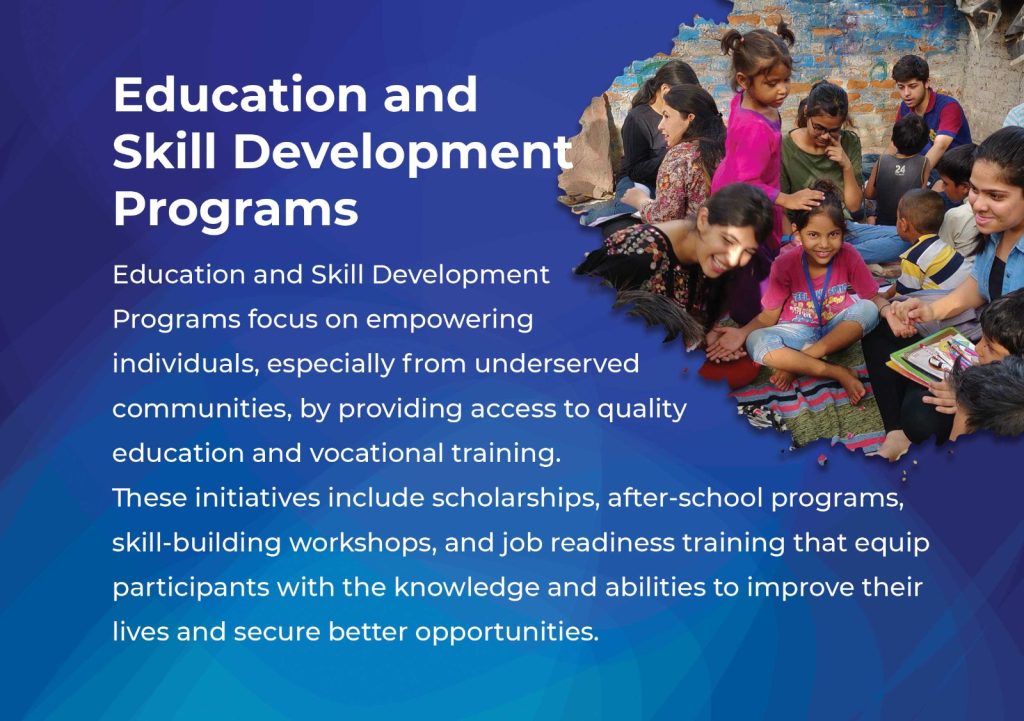
Education and skill development programs play a pivotal role in empowering individuals and communities, improving economic opportunities, and fostering personal growth. These programs can range from basic literacy initiatives to vocational training and advanced technical education, and they are essential for addressing both current and future workforce needs.
Here are several categories of education and skill development programs:
1. Basic Education Programs
- Literacy and Numeracy Programs: Focus on teaching basic reading, writing, and arithmetic to children and adults, particularly in underserved or illiterate communities.
- Primary and Secondary School Education: Establishing or supporting schools to ensure children have access to a quality primary and secondary education, which is the foundation for further learning.
- Catch-up Education: Programs that help children and adults who have missed schooling catch up to their peers.
2. Vocational Training
- Apprenticeships: Partnerships with local industries or businesses to provide on-the-job training, where individuals learn practical skills while working.
- Trade Skill Development: Programs focused on teaching specific trades, such as carpentry, plumbing, electrical work, welding, or automotive repair, that equip individuals with the skills needed for employment in these fields.
- Entrepreneurship Training: Providing aspiring entrepreneurs with the skills and knowledge needed to start and run a business, including financial management, marketing, and leadership.
3. Technical and Digital Skills Development
- IT and Coding Courses: Training in technology skills such as programming, web development, data science, and digital literacy, which are in high demand in today’s job market.
- Digital Literacy: Equipping individuals with the basic skills to use computers, smartphones, and the internet to access information, improve productivity, and communicate effectively.
- Cybersecurity and Data Management: Offering specialized training to meet the growing need for cybersecurity experts and data analysts across industries.
4. Higher Education and Professional Development
- University Scholarships and Grants: Programs designed to provide financial support for students to attend university or higher education institutions, especially in developing countries.
- Leadership and Management Training: Providing professionals with the skills to lead teams, manage projects, and develop strategic initiatives in various sectors.
- Certifications and Professional Courses: Offering specialized, short-term courses or certifications in fields such as healthcare, finance, engineering, and law.
5. Youth Development and Mentorship
- Youth Empowerment Programs: Training and mentorship initiatives aimed at developing leadership skills, career readiness, and self-confidence in young people.
- Career Counseling and Guidance: Helping students and young adults understand their strengths and career options, providing guidance on education pathways and job opportunities.
- Internship and Internship Networks: Connecting youth with internship opportunities in industries that align with their skills and interests to gain work experience.
6. Life Skills Training
- Soft Skills Development: Teaching essential life skills such as communication, teamwork, time management, conflict resolution, and emotional intelligence, which are critical in both personal and professional life.
- Financial Literacy: Providing education on managing personal finances, budgeting, investing, saving, and credit management to help individuals become financially independent.
- Health and Well-being: Programs that focus on mental and physical health, teaching stress management, healthy eating, physical activity, and building resilience.
7. Inclusive Education
- Special Education: Tailored education programs for individuals with physical, mental, or learning disabilities, ensuring that all children have access to quality education.
- Gender-Sensitive Education: Fostering equality in education by addressing barriers faced by girls, women, and other marginalized groups, including promoting leadership opportunities and STEM education for girls.
- Language and Cultural Education: Programs aimed at teaching minority or migrant groups the local language and culture to ease integration into new societies or communities.
8. Community-Based Education
- Adult Education Programs: Focused on improving adult literacy and providing ongoing learning opportunities for those who missed out on formal schooling.
- Parenting and Family Support Programs: Teaching parents and caregivers how to support their children’s learning and development, as well as improve family dynamics.
- Community Centers: Establishing hubs where people can access educational resources, learn new skills, and connect with peers for support and mentorship.
9. Environmental and Sustainable Development Education
- Climate Change Education: Programs that focus on teaching people about climate change, sustainability practices, and how to reduce their carbon footprint.
- Agricultural Training: Teaching sustainable farming techniques and modern agricultural practices to improve productivity, food security, and environmental conservation.
- Eco-Entrepreneurship: Encouraging the development of green businesses that focus on renewable energy, waste reduction, and eco-friendly products.
10. Online Education and E-Learning
- Online Courses: Providing online learning opportunities through platforms like Coursera, edX, or Udemy, which offer courses across a wide range of disciplines.
- Distance Learning Programs: Enabling people who cannot attend physical schools or universities to continue their education through distance learning, especially in rural or remote areas.
- Open Educational Resources (OER): Promoting the use of free online materials and resources to make education more accessible and affordable.
11. Global and International Education Programs
- Study Abroad Programs: Offering students the chance to study in another country to experience different cultures and gain a global perspective on education and career opportunities.
- International Development Programs: Collaborative projects aimed at improving education systems, developing local curricula, and providing resources to low-income countries.
- Volunteer and Teaching Abroad: Programs that allow educators to volunteer their services in countries or regions with a shortage of teachers.
Examples of Successful Programs:
- UNICEF’s Education Programs: Focus on ensuring every child, regardless of where they are born, receives a quality education.
- Teach for All: A global network working to ensure children in underserved communities have access to quality education.
- Khan Academy: Provides free, high-quality educational resources for learners of all ages across the world, particularly in STEM subjects.
- The Digital Literacy Program by Microsoft: A global initiative that aims to improve digital skills among youth and adults to help them succeed in the digital economy.
Conclusion:
Education and skill development programs are essential for individual empowerment and societal progress. By providing access to quality education and training, these programs help individuals build the knowledge and skills needed to improve their lives and contribute to their communities. Whether through formal schooling, vocational training, or online learning, education is the foundation for addressing challenges like poverty, inequality, and unemployment.