
Environment and Sustainability Projects
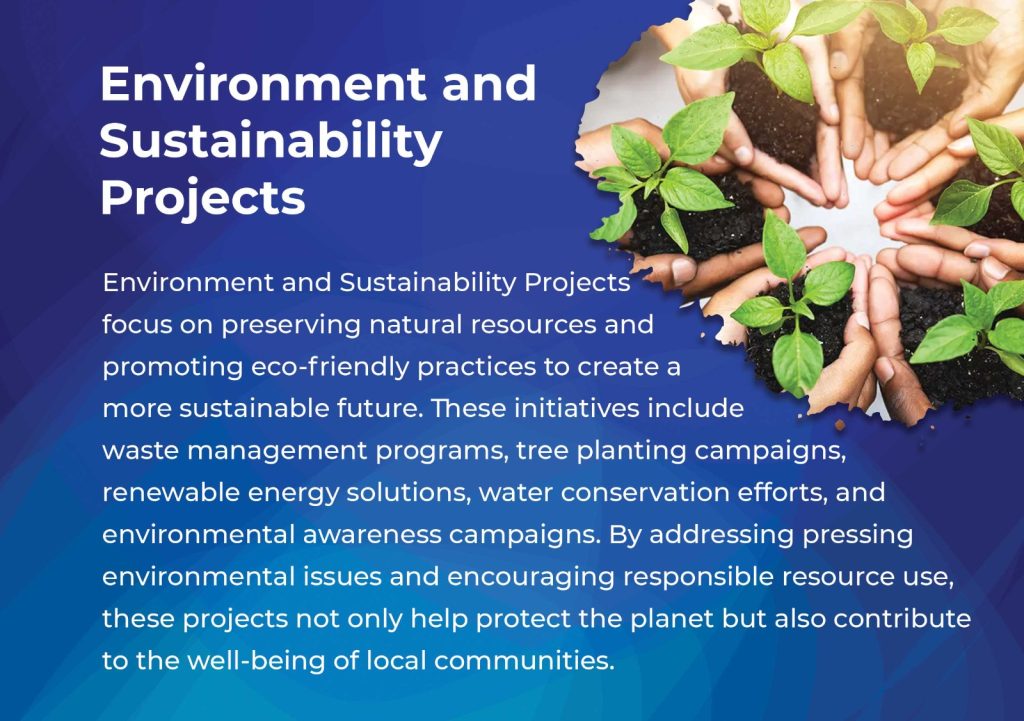
Environment and sustainability projects are crucial for addressing the pressing challenges posed by climate change, resource depletion, pollution, and biodiversity loss. These projects aim to protect the environment, conserve natural resources, promote sustainable practices, and create a more resilient future for people and ecosystems. Here’s an overview of various types of environment and sustainability projects:
1. Renewable Energy Projects
- Solar Power Initiatives: Installing solar panels in communities, schools, and businesses to reduce reliance on fossil fuels and provide clean energy.
- Wind Energy Projects: Developing wind farms or smaller-scale wind energy systems to harness wind power as a renewable source of electricity.
- Hydropower: Constructing small-scale hydropower plants or improving existing ones to generate clean energy without large environmental impacts.
- Geothermal Energy: Harnessing the Earth’s internal heat for sustainable energy production, particularly in regions with geothermal potential.
- Community-based Energy Solutions: Helping remote or off-grid communities install renewable energy solutions such as solar microgrids to improve their access to electricity.
2. Waste Management and Recycling
- Zero-Waste Initiatives: Developing community-based or corporate strategies to minimize waste production by reusing, recycling, and composting materials.
- E-Waste Recycling: Implementing programs to safely collect and recycle electronic waste, reducing harmful chemicals and promoting responsible disposal.
- Waste-to-Energy Projects: Converting organic waste into biogas or compost to reduce landfills and generate renewable energy.
- Plastic Reduction Programs: Launching campaigns to reduce single-use plastics, promoting alternatives, and encouraging recycling through educational programs.
3. Water Conservation and Management
- Rainwater Harvesting: Installing systems to collect and store rainwater for irrigation, drinking, and other domestic uses to reduce water dependency.
- Water-Efficient Irrigation Systems: Promoting drip irrigation and other water-saving techniques for agriculture to reduce water waste and improve crop yields.
- Water Purification Projects: Developing affordable water filtration systems to provide clean drinking water to communities in need, particularly in regions with limited access to safe water.
- Water Reuse and Recycling: Creating systems for reusing wastewater for non-potable purposes (e.g., industrial, agricultural, or landscaping uses) to reduce overall water demand.
4. Forest Conservation and Reforestation
- Reforestation Projects: Planting trees to restore degraded land, combat deforestation, and sequester carbon dioxide from the atmosphere.
- Agroforestry: Promoting the integration of trees into agricultural systems, which helps improve soil quality, increase biodiversity, and provide additional income streams for farmers.
- Forest Protection Initiatives: Strengthening legal frameworks and community engagement to protect forests from illegal logging, deforestation, and land conversion.
- Urban Green Spaces: Expanding urban parks, community gardens, and green rooftops to improve air quality, reduce the urban heat island effect, and enhance biodiversity.
5. Sustainable Agriculture and Food Systems
- Organic Farming: Supporting farmers in transitioning to organic farming methods, which avoid synthetic pesticides and fertilizers and promote soil health.
- Permaculture Projects: Implementing sustainable agricultural practices that mimic natural ecosystems, focusing on biodiversity, soil health, and water conservation.
- Urban Farming and Vertical Gardens: Promoting local food production in cities through rooftop gardens, community gardens, and vertical farming methods to reduce the carbon footprint associated with food transportation.
- Food Waste Reduction: Educating consumers and businesses on reducing food waste, improving storage methods, and redistributing excess food to communities in need.
6. Climate Change Mitigation and Adaptation
- Carbon Capture and Storage (CCS): Developing and implementing technologies that capture carbon dioxide emissions from industrial processes and store them underground to prevent their release into the atmosphere.
- Climate-Resilient Infrastructure: Building infrastructure designed to withstand extreme weather events (e.g., floods, storms, droughts) caused by climate change, especially in vulnerable regions.
- Green Building Standards: Encouraging the construction of energy-efficient, sustainable buildings using eco-friendly materials and renewable energy sources.
- Climate Education and Advocacy: Raising awareness about climate change and advocating for policies that address its causes and impacts, including lobbying for stronger emissions regulations and renewable energy adoption.
7. Biodiversity and Ecosystem Protection
- Wildlife Conservation: Establishing protected areas and wildlife corridors to preserve habitats and protect endangered species from extinction.
- Marine Conservation: Protecting oceans and marine life through the establishment of marine protected areas, combating overfishing, and reducing plastic pollution.
- Invasive Species Control: Managing and controlling invasive species that threaten local ecosystems, biodiversity, and agricultural productivity.
- Ecotourism Initiatives: Promoting responsible tourism practices that support the conservation of natural environments while benefiting local communities.
8. Sustainable Transportation
- Electric Vehicle (EV) Infrastructure: Expanding the availability of EV charging stations and promoting the use of electric cars, buses, and bikes to reduce greenhouse gas emissions from the transportation sector.
- Public Transportation Initiatives: Improving public transportation networks and infrastructure to reduce reliance on private cars and decrease urban air pollution.
- Bicycle Sharing Programs: Developing bike-sharing systems to encourage more sustainable and healthier modes of transport in cities.
- Carpooling and Ridesharing: Promoting carpooling and ridesharing programs to reduce traffic congestion, decrease fuel consumption, and lower carbon emissions.
9. Environmental Education and Awareness
- Sustainability Education Programs: Integrating environmental education into school curriculums to teach young people about sustainability, conservation, and climate change.
- Community Outreach Campaigns: Engaging communities through workshops, events, and awareness campaigns to encourage sustainable living practices such as waste reduction, water conservation, and energy saving.
- Eco-Certification Programs: Supporting businesses and organizations that adopt environmentally friendly practices by certifying them as sustainable and encouraging consumer choices that prioritize eco-friendly products.
10. Sustainable Business and Green Economy
- Corporate Social Responsibility (CSR) Initiatives: Encouraging businesses to adopt environmentally friendly practices, such as reducing waste, minimizing energy use, and supporting green supply chains.
- Green Financing: Promoting investments in sustainable projects and businesses through green bonds, impact investing, and other financial instruments that focus on environmental benefits.
- Circular Economy Models: Supporting businesses in shifting from linear production models (take, make, dispose) to circular models that promote recycling, reusing, and reducing waste.
Examples of Successful Environment and Sustainability Projects:
- The Ellen MacArthur Foundation: Promotes the transition to a circular economy, focusing on design, production, and consumption systems that are restorative and regenerative.
- The Ocean Cleanup: Developing technologies to remove plastic from the world’s oceans and prevent new plastics from entering them.
- The Carbon Trust: Helping businesses reduce their carbon emissions and improve their environmental impact through sustainability consulting and carbon management services.
Conclusion:
Environment and sustainability projects are fundamental in building a more sustainable and resilient future. They address critical environmental challenges such as climate change, resource depletion, and ecosystem destruction while fostering social and economic benefits. Whether through renewable energy, sustainable agriculture, biodiversity protection, or waste management, these projects are essential for creating a world that can meet the needs of both present and future generations.